
Join the Movement
Sign up for monthly updates and access to resources to scale community justice workers in your state. You can unsubscribe at any time.

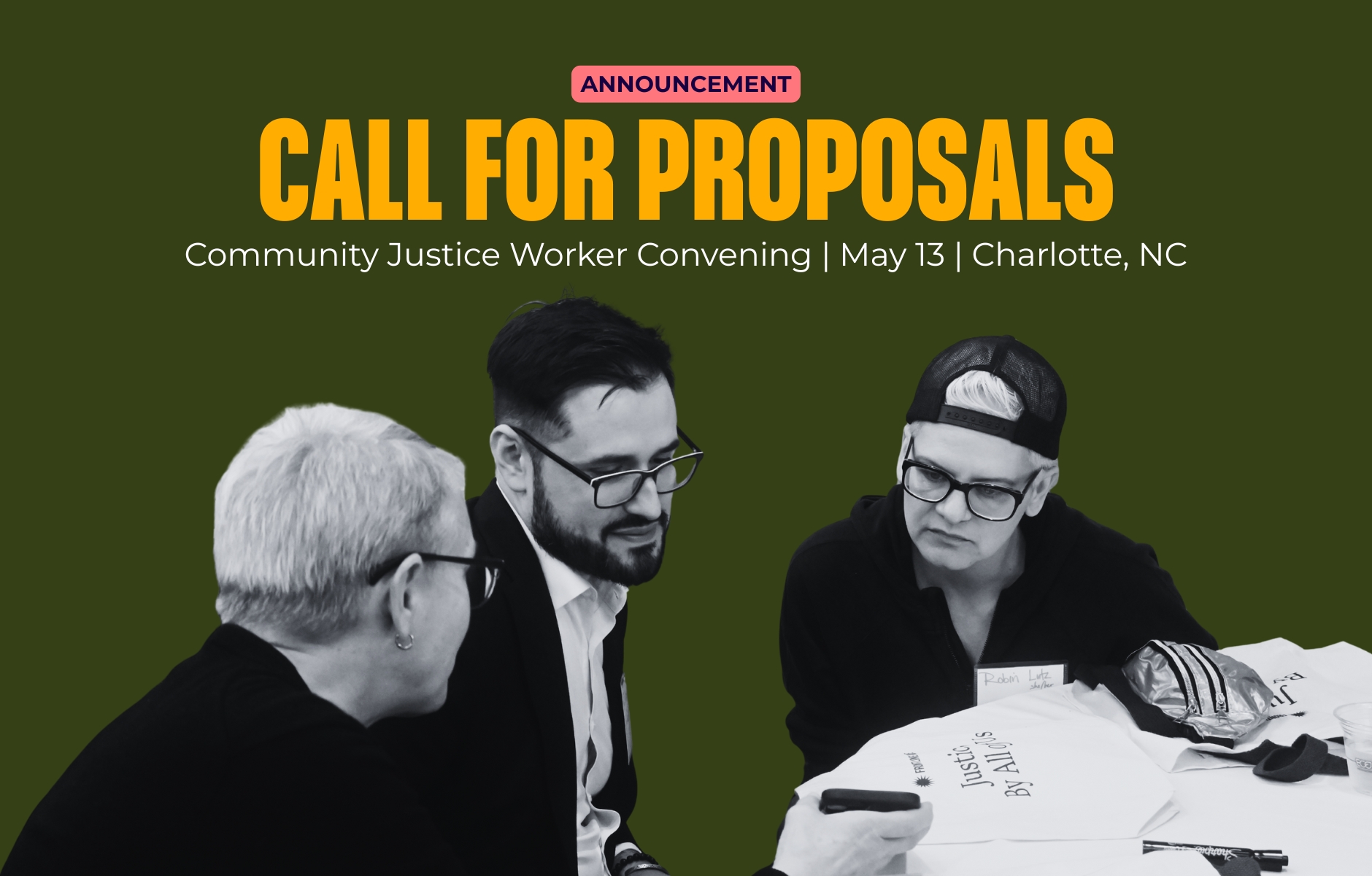
Frontline Justice is hosting a full-day pre-conference community justice worker convening on May 13, 2026, in Charlotte, North Carolina, just before the Equal Justice Conference (EJC). The Equal Justice Conference is a national annual gathering organized by the American Bar Association (ABA) and the National Legal Aid & Defender Association (NLADA), where civil legal service providers come together to learn and share ideas. Our pre-conference will bring together community justice workers and community-based practitioners to share practical strategies, learn from one another, and help shape the future of this work.
Before submitting a session proposal, you can watch a short video introduction to community justice workers here: The Community Justice Worker Impact: Helping Communities Navigate Life and Legal Issues
Community justice workers are trusted helpers who support people through everyday civil legal challenges that affect stability and well-being. They help community members understand their options, complete applications or appeals, and navigate issues in areas such as housing, healthcare, SNAP and other benefits, employment, financial security, education pathways, and family safety. Some community justice workers are based in community-based organizations, some in legal aid or Medical Legal Partnerships (MLPs), and many have been doing this work long before it was formally recognized.
We welcome proposals from anyone doing work that helps people navigate legal systems, solve civil legal problems, or stabilize community members' lives. This includes:
If your work strengthens community stability or helps people exercise their legal rights, we would love to hear from you.
We invite sessions that help people learn from real-world practice, strengthen community-based problem-solving, and surface insights that can improve justice worker programs nationwide. Strong proposals will do at least one of the following:
We welcome panels, workshops, facilitated conversations, roundtables, demonstrations, and story-based sessions. We are especially interested in proposals led by people with lived or community experience doing this work.
Session length: All sessions will run 45 minutes. Lightning talks are short, 7–10 minute independent presentations that highlight one practical idea. When you submit, please let us know which format you prefer.
Co-presenters: You are welcome to submit individually or as a small team (up to two co-presenters and a moderator).
Selection Timeline: Proposals will be reviewed soon after the deadline, and selected presenters will be notified directly by late March.
Deadline: Proposals are due by February 27, 2026. We encourage early submissions.
Submit Here: Frontline Justice EJC-Preconference Community Justice Worker Convening Call for Proposals Submission Form
You may download this form template to prepare your proposal before completing the form. You may also start the submission and save it for later once you get to page 2.
Questions: Contact info@frontlinejustice.org.
EJC Registration: Participation as a presenter in the pre-conference convening does not include or require registration for the Equal Justice Conference itself. Presenters who wish to attend EJC will need to register separately, and Frontline Justice does not cover lodging or travel costs. If your proposal is accepted, you will need to secure your own lodging, either at the conference hotel or another of your choosing.