
Join the Movement
Sign up for monthly updates and access to resources to scale community justice workers in your state. You can unsubscribe at any time.

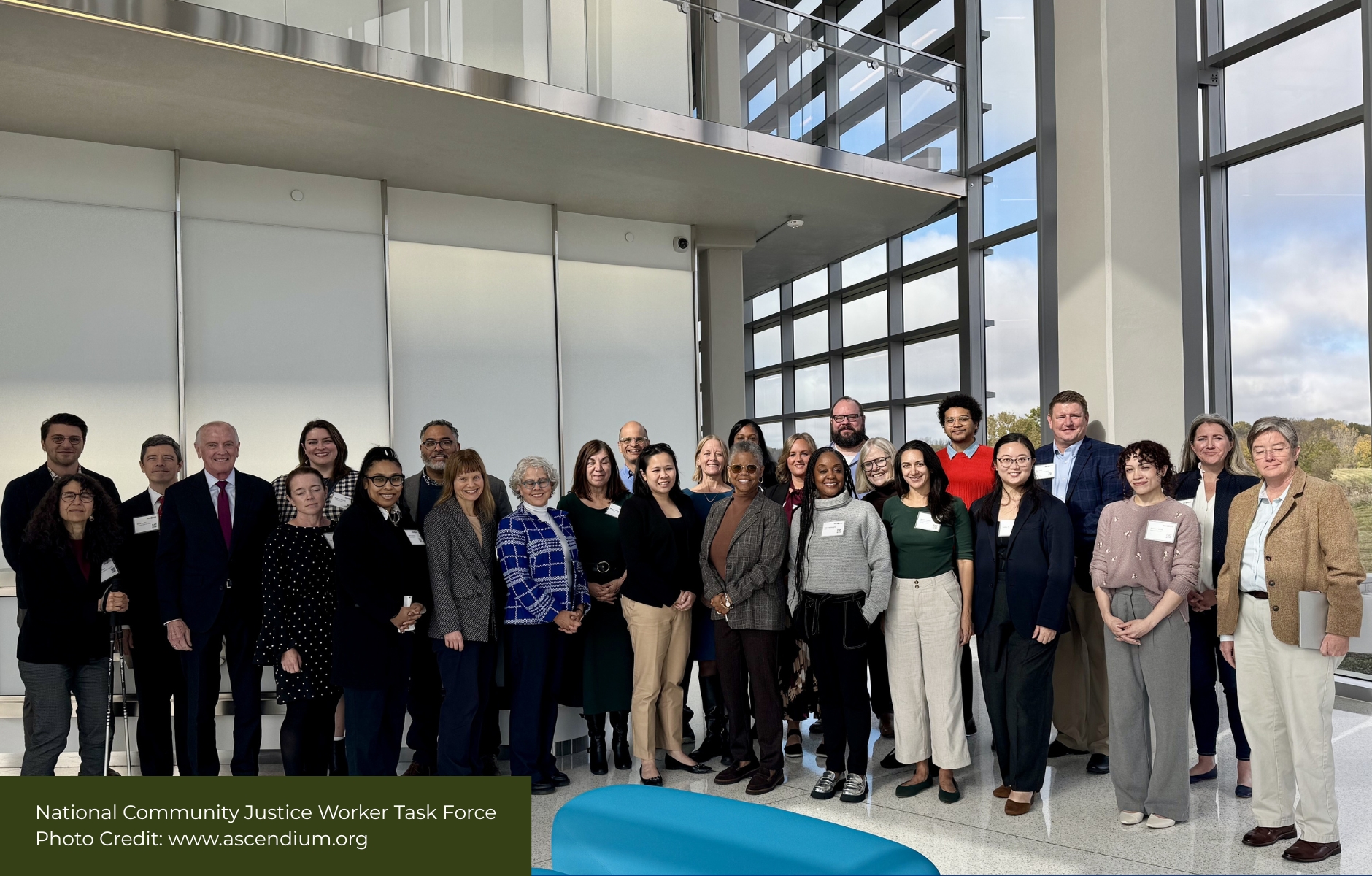
Since our inaugural gathering in Phoenix in January, this initiative has advanced significantly. We are thrilled that Ascendium has renewed its funding commitment for an additional two years, ensuring that we can build on the momentum of this inaugural phase.
Progress as of December 2025
Q1 and Q2:
Our work began with a strong foundation of research and listening. Through extensive interviews with Design Advisory Council (DAC) members and subject-matter experts, we gained a clear understanding of real-world needs and opportunities. This feedback directly informed the development of micro-credentialing concepts and learning pathway designs shared by our partners at the Education Design Lab (EDL), as well as the development of localizable SNAP training modules. The DAC was instrumental in providing insight and feedback that guided this phase.
Q3:
During the third quarter, the project transitioned from listening to prototyping. Ready-for-pilot SNAP courses were produced, and localization began with subject-matter experts in Alaska, Arizona, Wisconsin, and Texas. In parallel, EDL tested its initial learning pathways prototype.
The Task Force gathered in October in Madison, Wisconsin, in conjunction with the release of the report from LSC’s Rural Justice Task Force, Justice Where We Live: Promising Practices from Rural Communities. At our meeting the following day, we updated Task Force members on the DAC’s work, shared and received feedback on the initial credentialing and pathways prototypes, and demonstrated the SNAP modules and our AI assistant, Frontline Q (aka SNAPbot). We also gathered ideas and feedback to inform our planning for the next two years of the task force.
Q4 and Transition to Phase II:
In Q4, we synthesized feedback from the task force and focused on planning for Phase II, beginning January 2026. On our radar for the new year are the following:
We are excited about all the progress and look forward to seeing the momentum continue in 2026!